
A firm owner does not think about taxi apps the way a passenger does. A passenger asks “which app is cheapest tonight”. A firm owner asks “which of these is actually going to let me run my business, and which of these is running my business for me.” Those are very different questions.
This post is the firm owner’s version. Uber, Bolt, FreeNow, Addison Lee, and your own booking channel, reviewed on the things that matter when you are the one answering the phone at 3am. The honest conclusion up front: the big apps are genuinely good at a narrow set of things, and a well-run local firm beats them on almost everything else. You just have to know which battles to pick.
What the Big Apps Are Actually Good At
Credit where it is due. The big platforms do four things very well, and pretending they do not is how firm owners end up shouting at the wrong thing.
- Density in city centres. On a Saturday night in central Manchester, a passenger gets a car in three minutes. Your local firm, however good, cannot match that supply.
- Out-of-town passengers. Tourists and business visitors already have the app on their phone. They are not searching for your firm name.
- Payment plumbing. Fraud handling, chargebacks, driver payouts, in-app tipping. That is real infrastructure and they carry it.
- Brand recognition. “I’ll get an Uber” is a verb in English now. That is worth something.
None of that is in dispute. The mistake is assuming those four things are the whole job. They are not. Running a taxi firm is at least 20 things, and the apps do four of them.
The Six Places Local Firms Win Outright
Here is the short version. If your firm owns these six categories in your local area, the app is a top-up channel, not a competitor. Most firm owners already know this. Fewer have it written on their homepage.
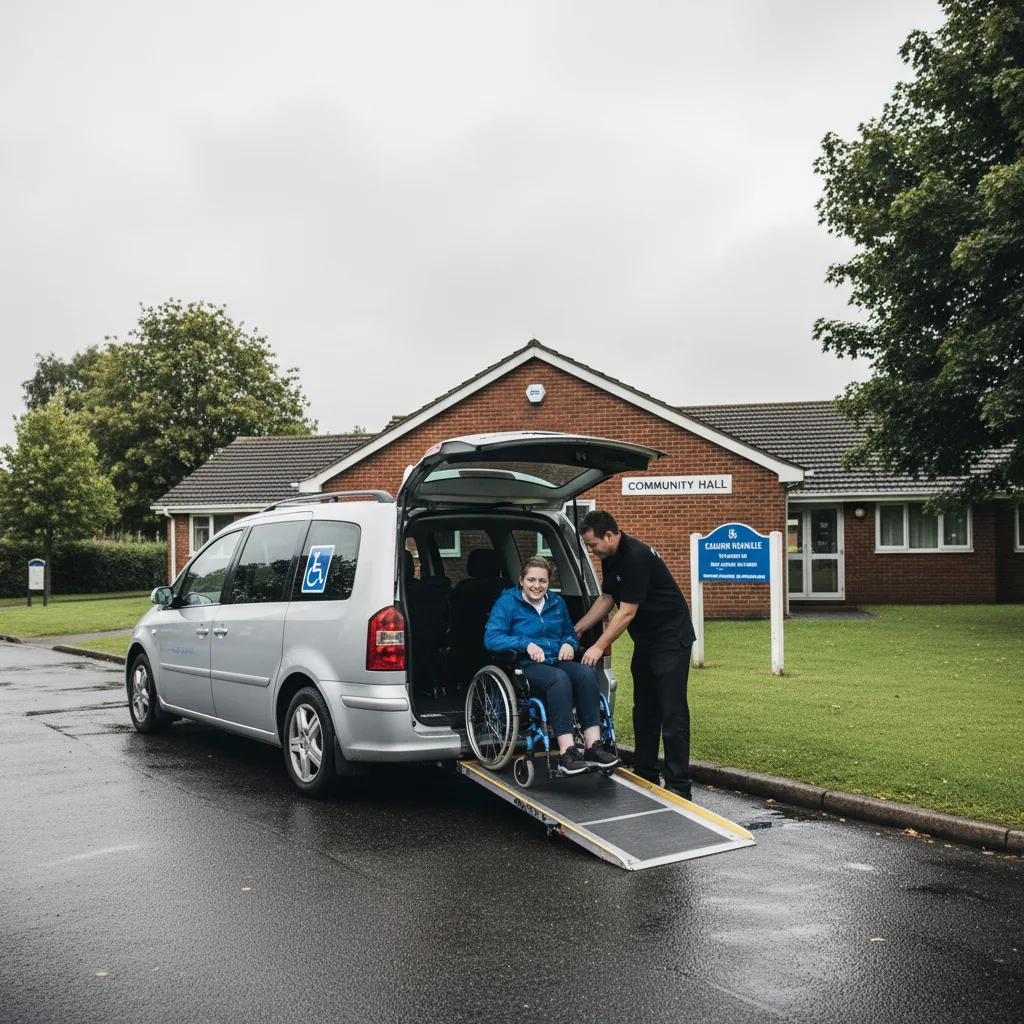
1. Wheelchair Accessible Fleet
Uber’s wheelchair-accessible vehicle coverage in the UK is thin outside London and patchy even inside it. FreeNow is better because of its hackney base, but the coverage still comes with a 10-minute-plus wait in most mid-sized towns. A local firm with two or three WAV vehicles on permanent dispatch owns this category. It is also steady, regulated, often council-contracted work. Every firm owner we talk to who runs WAVs reports it as their least commission-bleeding revenue.
2. Pet-Friendly Cabs
An app driver can refuse a dog. A local firm can flag specific drivers as pet-friendly on their own dispatch and route the job directly. Veterinary runs, emergency pet transport, guide dogs, assistance dogs. This is a small category that punches above its weight in reviews, because a passenger who can take their dog to the vet at 9pm on a Sunday tells everyone they know.
3. Account and Corporate Work
Monthly invoice, VAT-ready, fixed rates, named drivers. Addison Lee does this well in London. Uber for Business exists but the commission model means the corporate client pays platform margin on top of everything. A local firm with a decent account-customer login on its website, integrated to iCabbi or Autocab, wins this work every time on price and predictability. The dispatch integrations guide covers how to set that up cleanly.
4. 24-Hour Live Dispatch
Something goes wrong on an app booking and the passenger is on a support chat with a bot in Estonia. Something goes wrong on a local firm booking and they are talking to a human in the same town who can literally see the map. That difference is the entire brand of a local firm. Your website should say this in plain English on the homepage.
5. Fixed Airport Quotes
Uber will give you a range. Bolt will give you a “schedule” price that moves on the day. A local firm gives you a number you can put on an expense form in March and still honour in May. Airport work, especially pre-booked, is the single biggest category where a local firm beats the apps on both price and predictability.
6. Regulatory and Local Knowledge
Your drivers know which street is one-way, which estate has a locked barrier, which back gate to the hospital saves seven minutes at shift change. They know which TfL PCO requirements apply and which council’s private hire licence sits in the glove box. An app driver who arrived from London two months ago does not. This is not a small thing. It is the reason the WhatsApp group of firm owners exists. For the detail on licensing, the gov.uk taxi and private hire licensing statistics has the formal figures.
Niche Wins That Actually Pay Bills
The six categories above are the headlines. Inside them sit smaller niches that most firms undersell on their own websites. Three examples we see working across our portfolio.
- Night shift worker runs. NHS staff, factory shifts, warehouse nights. Contracted or season-ticket style. Regular, predictable, and apps will not touch it because a driver has to commit to the same run five nights in a row. A small firm with a named contact at the hospital site manager’s office wins this by turning up, not by bidding.
- Wedding and event cars. Apps cannot guarantee the specific vehicle, the specific driver, or the fact the car will be valeted that morning. A local firm running one or two executive cars in the fleet can. Charge the premium, it is worth it.
- Hospital discharge and dialysis. Booked 24 hours in advance, fixed route, often funded through a healthcare contract. Reliable, well-paid, and your drivers actually want these jobs because they are predictable.
A firm that runs two or three of these niches alongside its general work is less exposed to the app commission model than a firm that runs everything through a single queue.
What “Your App” Should Actually Be
Here is the awkward bit. A lot of firm owners ask us to build them “an app” because they have been sold the idea that the app is the answer to the app. It is not, in 80 percent of cases. What you actually need is a website that behaves like an app. Same booking journey, same fixed quote, same tap-to-call, no App Store review process, no £15,000 development bill.
A well-built mobile-first taxi website does six things your firm needs, and it does them with one URL.
- A fare calculator that quotes in under three seconds
- Fixed airport quote pages, one per airport you serve
- Tap-to-call in the hero on every page
- A booking form that hands off directly to iCabbi, Autocab, or Cordic
- Location pages for every town you cover so you actually rank
- Review stars pulled from your Google Business Profile onto the homepage
The taxi website design page goes through what each of those looks like and why it matters. We have built this six times. It works.
Real Firms, Real Wins
Three quick examples from our own portfolio, because generalities only go so far.
- SkyLink Cars (fixed-fare airport). Gained the fixed-quote airport market against the surge-pricing apps by publishing every postcode-to-terminal fare on the site. Direct airport bookings went from a quiet week to a steady queue.
- Brighton Yellow Cabs (seaside general fleet). Owned the “cabs with child seats available” niche by listing three drivers with in-car seat fittings on the homepage. Pet-friendly and child-seat bookings became a distinct channel in the dispatch queue.
- Mersey Cabs (Liverpool match-day operator). Built match-day price transparency into dedicated Anfield and Goodison pages. Won the pre-book market on derby days where app surge pricing triggered local media coverage.
Every one of these wins came from three things: a clear niche, fixed pricing published on the site, and a booking form that did not fall over on a phone. No magic.
The Honest Limits
A few places where a local firm will not win, and you should know.
- Spontaneous midnight in the city centre. Uber wins supply density. You will not fix that with a website.
- First-time visitors to the town. They already have Uber open. Local SEO closes this gap slowly, but it does not happen overnight. The local SEO guide covers the 12-week plan.
- Micro-trips under two miles. App pricing can undercut a metered hackney. Let those go and focus on the work that pays better.
Losing gracefully on three categories and winning on six is a very good trade.
Your Move This Week
Do not try to out-app the app. Pick the categories you already win in and make sure your website says so, loudly, on the homepage. Three steps, about 30 minutes.
- List your six wins. Write down the six categories where your firm already beats the apps in your town. WAV, pet-friendly, account work, airport fixed quote, school run contract, night shift run. Stick it on the dispatch wall.
- Check your homepage for those six words. If “wheelchair accessible”, “account customers”, or “fixed airport price” are not on your homepage in the first screen, the passenger does not know you do them.
- Book a free booking funnel audit. We will look at your site against your three biggest app competitors in your town and send back a one-page PDF with the fastest wins. No pitch. Request your audit here.
Our full services and pricing pages lay out what a proper build costs in 2026. Three tiers, fixed fees, no retainer surprises. The portfolio shows what it looks like when it is done.
The best taxi app in the UK in 2026, for a local firm owner, is the one that quietly adds top-up work when the phone is quiet, and does not touch the 80 percent of your business the apps cannot do. That 80 percent is yours. Go put it on your homepage.