
Most firm owners we talk to think a taxi booking system is one thing you buy off a shelf. It is not. There are three broad paths, and the cost gap between them is more than ten times. Pick the wrong one and you either overspend by £15,000 in year one or you lose a booking every Friday night because the form is not wired to dispatch.
Here is the short version. You can build a bespoke booking system from scratch, buy a standalone vendor product, or embed a booking widget directly into your own website. Each has a proper place. For most UK firms under 40 vehicles, the third option wins on cost, speed, and control. We will walk through all three, with real numbers.
What a Taxi Booking System Actually Does
Before we compare, strip the phrase back. A taxi booking system is any process that turns a passenger’s intent into a job sitting in your dispatch queue. Six jobs, every time:
- Capture pickup and drop-off
- Quote a fare the passenger can see before they commit
- Take a contact number and any pickup notes
- Confirm the booking to the passenger
- Hand the job to dispatch without a human re-keying it
- Record the booking so you can report on it later
Any system that does those six things is a booking system. The difference between paths is where the code runs, who owns it, and who pays to keep it working.
Path 1: Build a Bespoke Booking System
This is the path a lot of firm owners assume they need. You hire a developer or agency to build the whole booking engine from the ground up. Fare calculation, mapping integration, database, admin panel, driver app, the lot. You own the code. You can change anything.
It is also the path that has cost more UK firms more money with less return than anything else we have seen in this trade. A proper bespoke booking platform is a six-figure project. £50,000 is the floor if you want something that will pass WCAG 2.2 AA, handle card payments, and not fall over at 11pm on a Saturday.
The kicker is ongoing cost. Custom software is not a thing you build and leave. Google Maps pricing changes. Browsers deprecate APIs. Someone finds a bug. You are now paying a developer £400 a day to maintain the thing you already paid for. For a 20-vehicle firm, the maths does not add up.
When does it make sense? If you are a 100-plus vehicle operator with a distinct model (airport-only, corporate chauffeur, a specific rural franchise) and your competitive edge is the booking experience itself. For anyone else, you are reinventing a wheel that iCabbi, Autocab, and Cordic have already made round.
Path 2: Buy a Vendor Booking Product
This is what most firms already do without thinking of it that way. You pay a dispatch vendor (iCabbi, Autocab, Cordic) for their platform, and their booking surface comes as part of the package. Passengers download the vendor’s branded-for-you app, or use the vendor’s web booker, and jobs appear in dispatch because it is all one system.
It is the path of least resistance, and for firms over 40 vehicles with a serious app-first passenger base, it is usually right. The industry consortium iCabbi has a good breakdown of what their platform covers end to end.
The problem is it is not really your booking system. It is theirs. You get:
- A booker page that looks like their booker page. Light customisation, but the skeleton is theirs.
- Data that lives in their cloud. If you leave, you leave it.
- Pricing tied to vehicle count. The bill grows with the fleet, whether bookings do or not.
- No SEO lift. The booker page is on a subdomain or vendor-hosted URL and does not help your own site rank.
For a firm trying to claw back direct bookings from Uber and Bolt, the missing SEO lift is the real cost. If your booking happens at book.vendorname.com, you are building the vendor’s domain authority, not yours.
Path 3: Embed a Booking Widget in Your Own Website
The third path, and the one we recommend for most firms under 40 vehicles, is to keep your own website as the front door and embed a booking widget in it. The passenger never leaves your domain. The form captures the booking, shows a fare, and hands the job straight to dispatch through an integration hook.
What “widget” means here is either a fare calculator and form we build into your site, or a third-party booker embedded inside your own layout so it looks and feels like one site. The difference between this and Path 2 is who owns the shop window. You do.
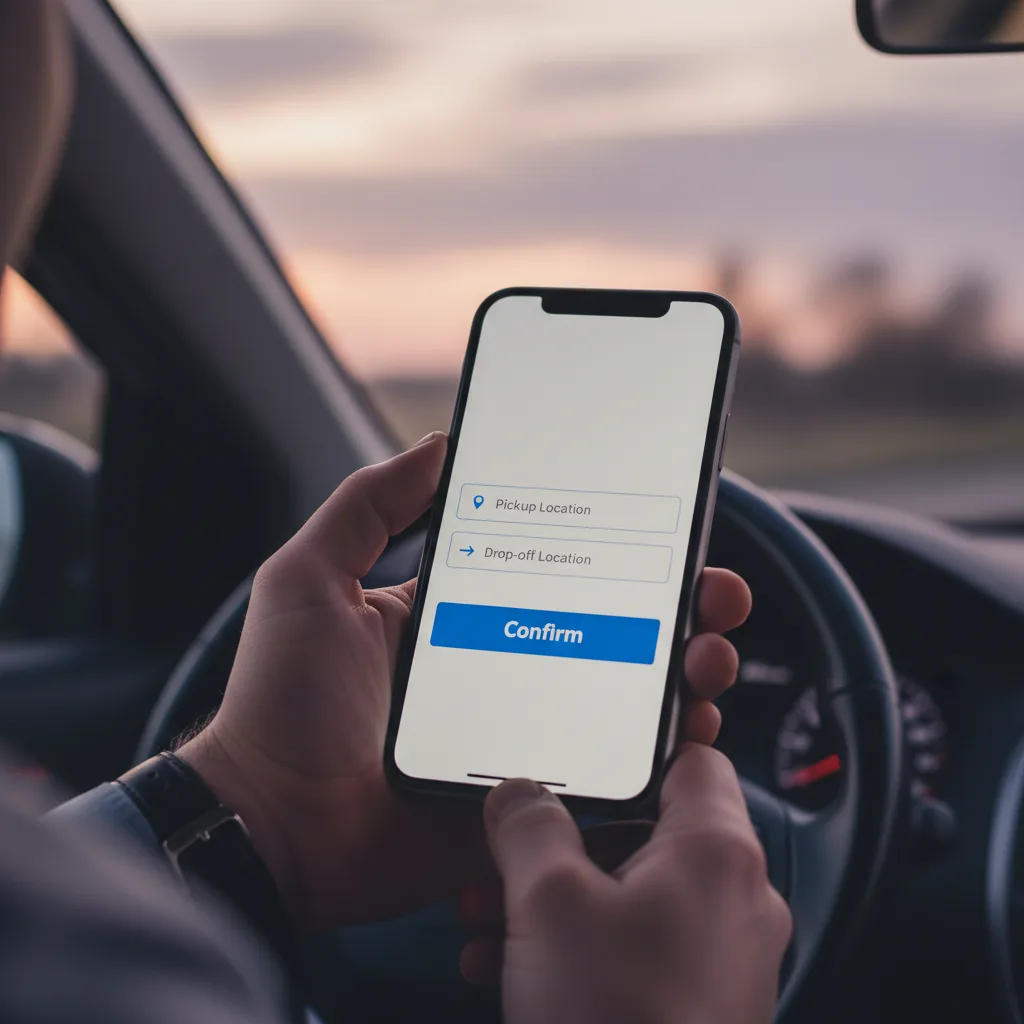
We run this on our taxi website builds. A booking on your domain counts as a direct booking in every analytics tool, feeds your Google Business Profile, and shows up in search for “taxi plus your town”. None of that is true if the booking lives on the vendor’s subdomain.
The Comparison Table
Side by side, with the numbers we see on real firm quotes in 2026.
| Factor | Build bespoke | Buy vendor product | Embed in your website |
|---|---|---|---|
| Upfront cost | £50,000 to £150,000 | Setup £500 to £2,000 | £499 to £1,499 (site) + form included |
| Monthly cost | £1,000+ maintenance | £200 to £800 depending on fleet | £29 to £129 care plan |
| Time to live | 6 to 18 months | 4 to 8 weeks | 2 to 4 weeks |
| You own the data | Yes | No | Yes |
| SEO benefit to your domain | Full | None | Full |
| Dispatch handover | Custom built | Native | Via integration hook |
| Best for | 100+ vehicles with unique model | 40+ vehicles, app-first | Under 40 vehicles |
Why Embed Wins for Most UK Firms
Three reasons, in order of how much they matter to your bottom line.
- Your domain earns the ranking. Every booking-intent search that lands on your site builds your SEO moat. A vendor subdomain does nothing for you. Over three years, that gap is the difference between ranking for “taxi Horsham” and not.
- The cost is a fraction. £799 for a proper Essential build with a fare calculator and dispatch handover, plus £29 a month care, is under £1,200 in year one. The bespoke route is 40 times that. The vendor route with pooled booker licensing often lands at £5,000 a year once you are over 20 cars.
- The dispatch handover is the same quality. iCabbi, Autocab, and Cordic all expose webhooks or APIs. A booking posted from your own site lands in the dispatch queue with the same speed and fields as a booking from their native booker. We have wired this up six times. See the dispatch integrations guide for the technical notes.
When Embed Is Not the Right Answer
We are not fans of pretending one answer fits every firm. Three situations where we would push you to Path 2 instead:
- You are already running 80 percent of bookings through an app. If app-first is already how your passengers behave, the vendor’s native booker is fine. Spend your website budget on SEO for the corporate account page instead.
- You do not have a dispatch platform yet. Embed needs something to hand the job to. If you are still dispatching by radio and whiteboard, sort dispatch first, then the website.
- You are one driver with one car. A £499 Starter site with a form that emails bookings to you is enough. You do not need webhooks.
What It Costs to Embed, Honestly
Our own pricing for the embed route is on the pricing page. The short version:
| Build tier | One-off | Booking system included |
|---|---|---|
| Starter | £499 | Form emails bookings to dispatch inbox |
| Essential | £799 | Fare calculator plus dispatch handover hook |
| Fleet | £1,499 | Full iCabbi/Autocab/Cordic integration, airport fixed quotes, account portal |
Add £29 to £129 a month for the care plan that keeps it running. Add £49 to £179 a month for local SEO if you want to rank. That is it. No per-vehicle escalators, no separate booker licence, no integration fees that appear in month three.
On a three-year view, the Essential build (£799 one-off plus £69 a month care) lands at £3,283 in total. A SaaS widget at £99 a month over the same period is £3,564. The website route is cheaper, the booking lives on your domain the whole time, and you own the code. That is the maths that ends up on most firm owners’ decision sheets once they work it through.
Your Move This Week
Pick up your phone. Open your current site. Try to book a fare to your nearest airport. Count the taps. Note whether the booking lands on your domain or somewhere else. Then do the same on a competitor’s site in your town.
If your booking funnel is weaker than theirs, you do not need to pick a path this week. You need a booking funnel audit. We will look at your site on a phone, map the six jobs above to what your system actually does, and send a one-page PDF with the fixes. No pitch attached. Request your free audit here.
For the longer read on what a good form looks like end to end, see our guide to three taps to booked. For the services behind all of this, the services page lays out what we build and what we do not.
A booking system is not a shiny product. It is the pipe between a passenger on a wet pavement and a driver who is already on the way. Pick the path that builds the shortest, cheapest, most reliable pipe you can afford. For most UK firms, that pipe runs through your own website.