It is Friday night. You pick up a driver’s phone to check a booking and your own website is open on it. The homepage takes six seconds to load over 4G. The phone number is at the bottom, in grey text, on a white background. The booking form is a contact form with a subject dropdown. No fare shown. Seven taps to submit.
That is what most UK taxi websites still look like in 2026. A firm pays £600 to a local designer in 2017, never touches it again, and slowly watches the phone go quieter. The website is not broken exactly. It is just not doing its job.
A proper taxi website is not a digital leaflet. It is a booking channel. Every paragraph and every button should either take a booking, make the phone ring, or get cut. If you are about to spend money on a new site, here is what you should expect to get and what it should cost in 2026.
Most UK Taxi Websites Are Still Selling 2015
The average taxi site we are asked to replace has three problems and they are always the same three.
- The phone number is hidden. It is either in the footer, in a tiny image, or behind a hamburger menu. A passenger standing in the rain should never have to scroll for your number.
- The booking form is a contact form in disguise. Name, email, “subject”, message. No fare shown. Lands in an inbox. A dispatcher then has to re-key it into iCabbi or Autocab by hand.
- The site fails on a phone. Buttons too small, text too narrow, forms that zoom and lose the keyboard on tap. Around 80 percent of your passengers are on a phone. If the site does not work there, nothing else matters.
Fix those three things and you will double direct bookings inside six months. We have seen it now on six separate sites, across firms from 8 to 38 vehicles. The numbers do not lie.
The 9 Things Every UK Taxi Website Should Include
Here is the full checklist. If the quote you are looking at does not mention each of these nine things by name, ask why.
- A call-first hero. Your phone number, tap-to-call, above the fold on every page. Not a logo, not a hero image, not a “welcome to our firm” paragraph. The number.
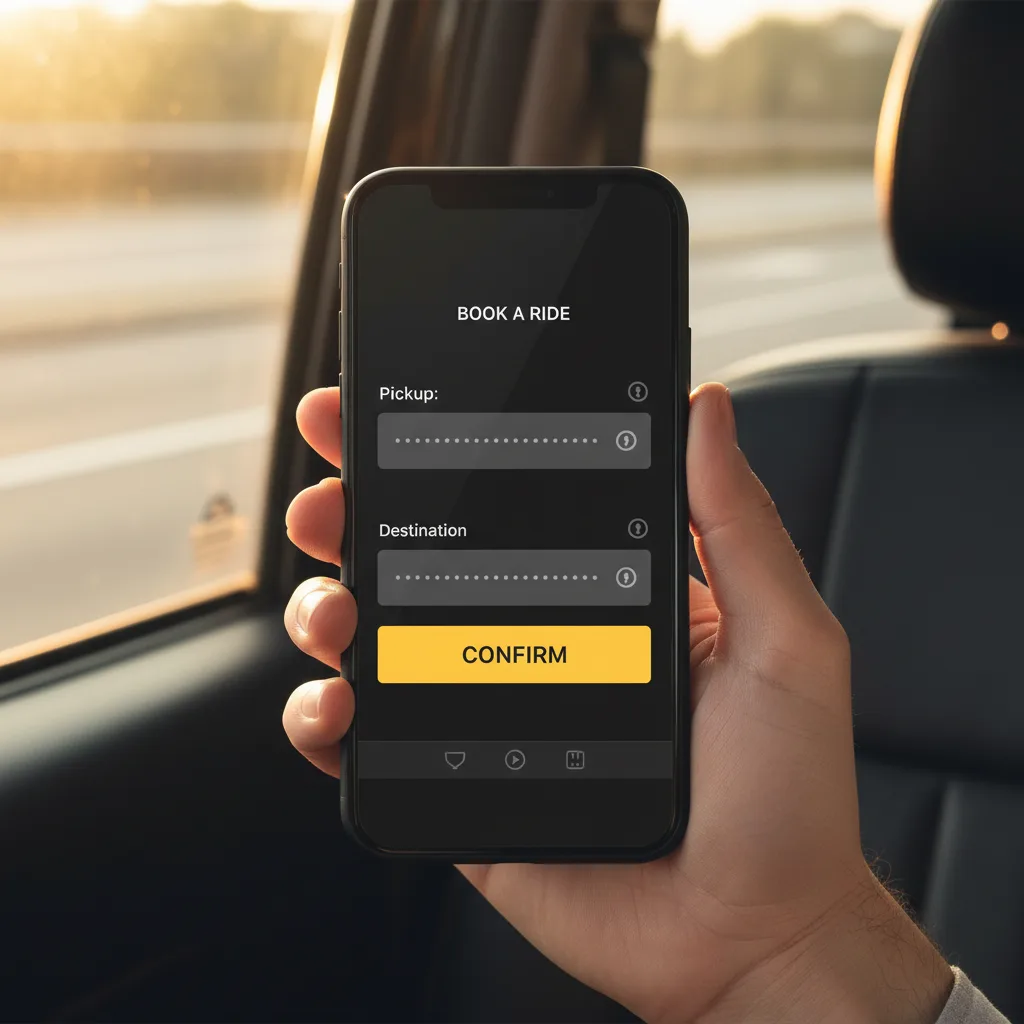
- A fare calculator, not a contact form. Pickup postcode, drop-off postcode, vehicle type. Fare estimate inside three seconds. Passengers who see a price stay. Passengers who have to wait for an emailed quote leave.
- Mobile-first design. Tap targets at least 44 pixels tall. Forms that use native keyboards (numeric for phone, email keyboard for email). No pinch-to-zoom needed on any page.
- Fixed-price airport quotes. A dedicated page per airport you serve, with a fixed fare from common postcodes. Airport work is price-shopper work. Show the price or lose the booking.
- Real dispatch integration. A booking from your site should land directly in iCabbi, Autocab, or Cordic, with the correct address, vehicle type, and pickup time. If the designer suggests “we’ll email the bookings to you,” walk away.
- Location pages for every town you cover. One page per town, with real copy, real postcodes, and fixed fares where you have them. Generic “We cover the whole of Kent” does not rank for anything.
- Google Business Profile and review integration. Your GBP is probably worth more than your website in year one. A good designer sets it up, adds booking links, and pulls review stars onto your homepage.
- WCAG 2.2 AA accessibility. Not optional any more. Contrast ratios, keyboard navigation, form labels, alt text. See the WCAG 2.2 standard at w3.org for the detail. A site that fails this can be challenged under the Equality Act 2010.
- Core Web Vitals passing. Largest Contentful Paint under 2.5 seconds on 4G. Cumulative Layout Shift under 0.1. Interaction to Next Paint under 200 milliseconds. web.dev has the full spec. Google uses these as a ranking signal. A slow site will not rank.
What a Taxi Website Should Cost in 2026
Here is the short version. These are the prices we charge ourselves, and they are broadly in line with other UK specialists. Generalist agencies will sometimes quote more, but rarely less. Anyone quoting under £300 is selling you a template with a booking form bolted on.
| Tier | One-off | Pages | Good for |
|---|---|---|---|
| Starter | £499 | 5 pages, 1 location page, booking form (email out) | A one or two-vehicle firm testing the water |
| Essential | £799 | 8 pages, 3 location pages, fare calculator, dispatch handover, GBP setup | Typical 5 to 20 vehicle firm (most firms) |
| Fleet | £1,499 | 15 pages, unlimited location pages, airport pages, full dispatch integration, account portal | 20+ vehicle firm with corporate accounts |
On top of the build, you should expect to pay a monthly Care Plan. That is not a scam: it covers hosting, security patching, uptime monitoring, and small content tweaks. Without it, the site you paid for in 2026 is the site you still have in 2029, which is the problem we started with.
| Care Plan | Monthly | Includes |
|---|---|---|
| Care Essential | £29 | Hosting, security patches, uptime monitoring, quarterly tweaks |
| Care Plus | £69 | All of Essential, plus monthly content changes and priority support |
| Care Pro | £129 | All of Plus, plus Core Web Vitals reviews and booking funnel audits |
Our full pricing page, including Local SEO and Google Ads packages, lives at Pricing. It is one table per service, three tiers each, no hidden fees.
How to Tell If Your Designer Actually Knows Taxi Work
You do not need to vet your designer on technical skill. You need to vet them on trade knowledge. Here are five things a taxi-literate designer will do in the first call. If they miss three or more of them, get a second quote.
- They ask about your dispatch system in the first five minutes. iCabbi, Autocab, Cordic, TaxiCaller, something bespoke. If they do not ask, they are going to build you a contact form.
- They ask about your airport work. Which airports, which fixed quotes, whether you do meet-and-greet. Airports are usually 15 to 40 percent of revenue. A site that ignores them is ignoring nearly half your business.
- They show you other taxi sites they have built. Plural. Live. Named firms. Not a template with “Taxi Co Ltd” on it. Our own examples are on our portfolio page.
- They quote a fixed fee for the build. Not a day rate. Not “around” a number. A fixed fee you can put on a purchase order.
- They ask who answers the phone at 3am. Because whoever answers the phone at 3am is your brand. A designer who asks this is thinking about your firm, not just your site.
What Happens After Launch
The common mistake is treating the site as a one-off. A site that launched in 2026 without a maintenance plan will be broken by 2028. WordPress updates will pile up. Plugins will stop working. Someone will try to log in with the password “admin1234” and succeed.
Expect three ongoing costs:
- Care Plan. £29 to £129 a month, as above. Non-negotiable.
- Local SEO. £49 to £179 a month if you want to rank. Google Business Profile maintenance, citation building, review strategy, location page roll-outs.
- Google Ads (optional). £99 to £349 a month management fee, plus your ad spend. Skip this for year one unless you are tendering for a big airport contract and need traffic today.
The full breakdown of our services page explains what each includes. If the agency you are speaking to cannot quote these numbers off the top of their head, you are about to hire a generalist.
Your Move This Week
You do not need to commission a new site this week. You need to know whether your current one is costing you bookings. Three steps, about 15 minutes total.
- Open your site on your own phone. Not a work laptop. Your phone, on 4G, not wifi. Try to book a fare to your nearest airport. Count the taps. If it is more than five, you are bleeding bookings.
- Search “taxi” and your home town in Google. Not “your firm name”. Just “taxi” and the town. If you are not on the first page, your website is effectively invisible to new passengers.
- Request a free booking funnel audit. We will look at your site on a phone, count the taps for you, check Core Web Vitals, and send a one-page PDF with the three biggest fixes. No pitch attached. Request your audit here.
If you want more detail on the booking form problem specifically, we wrote a deep dive on reducing it to three taps at Three taps to booked. And if your next question is “which dispatch system should I pair my new site with,” the dispatch integrations guide covers iCabbi, Autocab, and Cordic side by side.
A taxi website should earn its keep. If yours does not, now is the year to fix it.